Beyond “Sustainable”: The New Material Literacy Defining Interiors
Luxury in interiors is entering a quieter phase. It is no longer defined only by rarity, visual abundance, or statement-making objects. Increasingly, it is defined by something more grounded: whether a material can explain itself.
What is it made of? How will it age? Can it be repaired, refinished, or replaced in parts rather than discarded as a whole? Does it contribute to a healthier interior, or only to a better first impression?
These are no longer niche questions. They are shaping a broader shift in how interiors are imagined, specified, and judged. And they are redefining what premium means.
A New Definition of Premium
For years, luxury in interiors was often tied to visual richness — rare stones, dramatic contrasts, dense layering, and a sense of total completion. That language still exists, but it is starting to feel incomplete.
A room can be beautiful and still be materially fragile. It can feel warm and elevated while relying on short-lived finishes, sealed construction, and products with no clear repair path. It can photograph well, yet age poorly.
What is replacing that older model is a more disciplined one. Premium now means legibility. Materials are expected to justify themselves. A surface should do more than look expensive; it should reveal something about durability, maintenance, health, and lifespan.
Materials Are Becoming the Concept
One of the clearest shifts in contemporary interiors is that materials are no longer being treated as the decorative layer applied at the end of a project. They are becoming the project’s logic from the start.
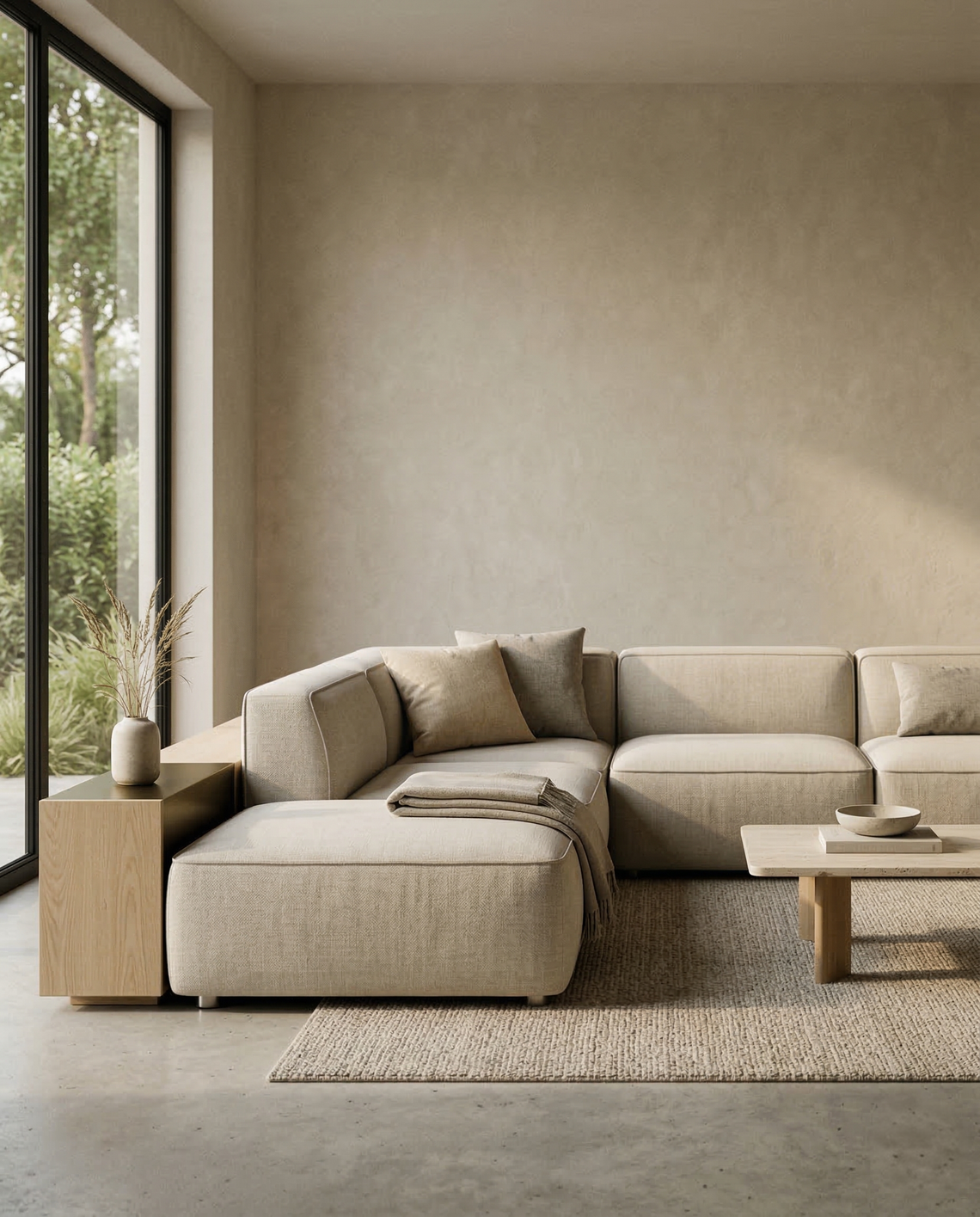
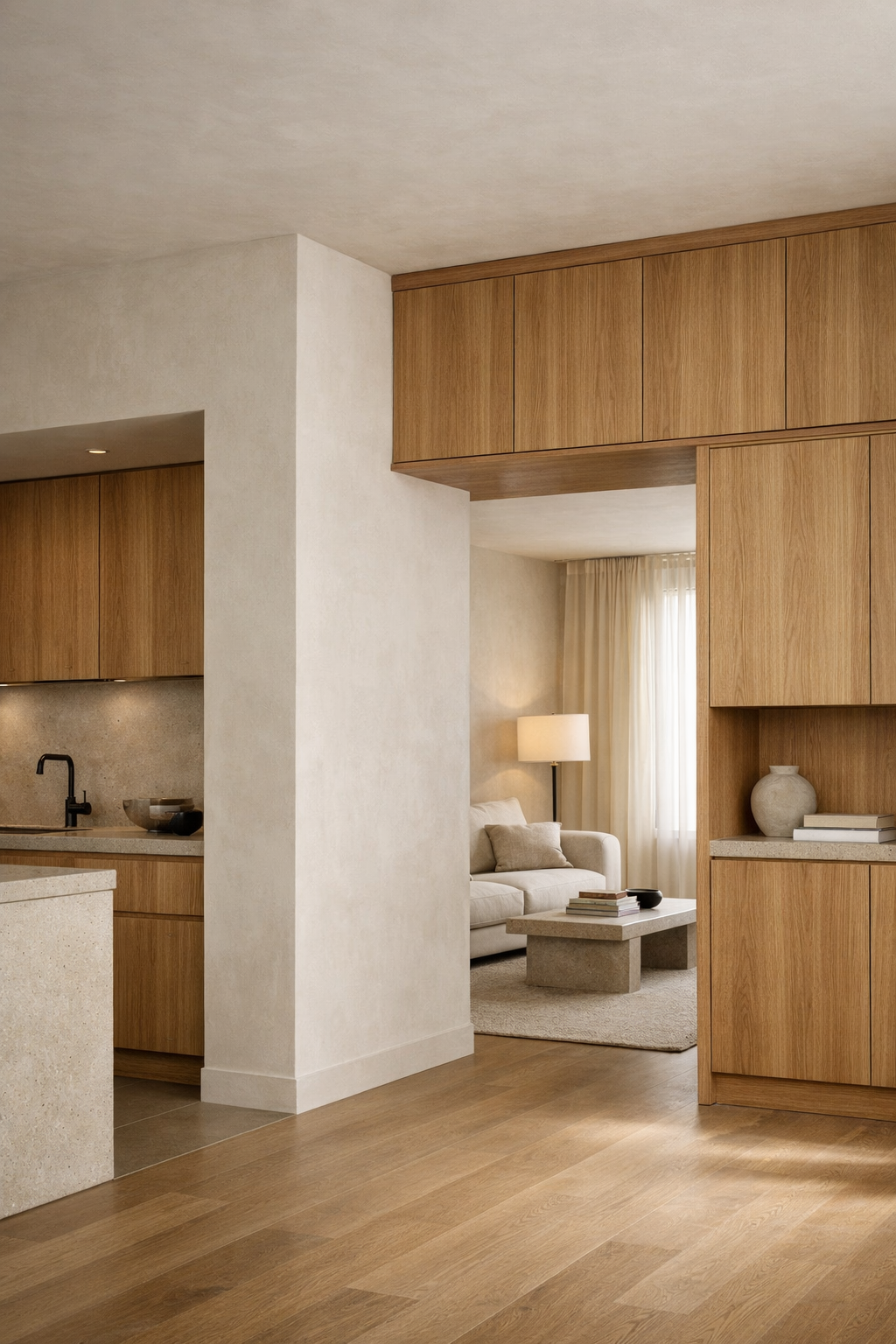
Wood, stone, ceramic, limewash, linen, brushed metal, natural composites — these materials are increasingly used not as styling devices, but as the emotional and structural language of a room. They shape acoustics, tactility, visual calm, and the way a space ages.
This is why so many of today’s most compelling interiors feel quieter. They rely less on novelty and more on surface honesty. Wood is allowed to soften over time. Stone is used architecturally rather than theatrically. Upholstery is selected with maintenance and replacement in mind. Joinery feels made, not sealed shut.
The result is not austerity. It is confidence.
From Claims to Receipts
The word “sustainable” helped open an important conversation, but it has also become too vague to carry meaning on its own. It can describe serious material responsibility, or it can function as branding.
That ambiguity is changing the tone of design culture. Designers, architects, and increasingly clients are moving away from broad claims and toward more specific questions. They want traceability. They want emissions information. They want to know whether something can be repaired, serviced, disassembled, or refinished. They want to understand not only what a product is, but what happens to it later.
This is a meaningful cultural shift because it asks more from design. It asks for proof.
The most credible interiors of this moment are not the ones making the loudest ethical claims. They are the ones built on better questions:
What documentation exists?
What is the maintenance cycle?
Can parts be replaced?
How does the finish behave over time?
What is being measured, and by whom?
Why Repairability Matters
Repairability may become one of the most important design values of the next few years.
A well-made interior is no longer judged only by how complete it looks on day one. It is judged by whether it can absorb use, adapt to change, and remain useful without full replacement. That applies to upholstery, built-ins, hardware, lighting, and finish systems alike.
This is where craftsmanship takes on a new meaning. It is no longer simply about visible handwork or artisanal character. It is also about serviceability. How something is assembled matters because it determines whether it can live longer.
Luxury, in that sense, is shifting from what dazzles to what endures.
Indoor Air Is Part of the Design
Another major shift is happening in how interiors think about health. Indoor air quality has often been treated as a technical issue, separate from design language. In reality, it is deeply connected to material choice.
Paints, adhesives, sealants, composite wood products, textiles, upholstery, and even cleaning systems all shape the lived atmosphere of a room. Air is not separate from design. It is one of its materials.
This does not mean interiors need to become clinical or visually stripped back. It means that a well-made room now includes a more thoughtful material stack. It considers what off-gasses, what cures, what lingers, and what claims are actually meaningful.
A beautiful interior should also feel good to inhabit over time. That is becoming part of the premium standard, not an optional extra.
Small Spaces Are Forcing Better Decisions
Small-space living has intensified all of these questions. In compact homes, every material decision becomes more visible because every decision is closer to the body. There is less room for redundancy, less tolerance for decorative filler, and less patience for objects that do not earn their place.
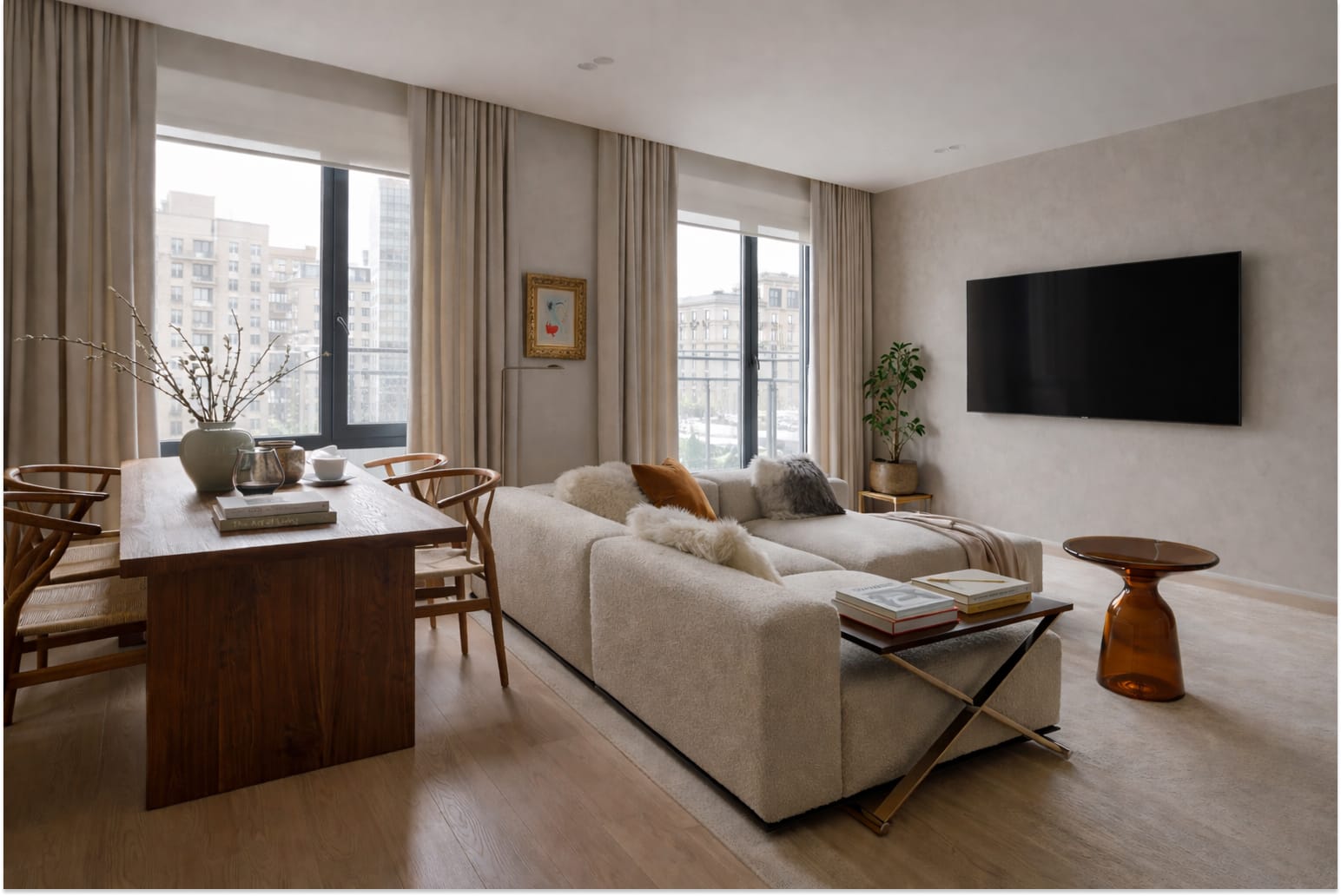
That is why some of the most intelligent interiors today are also the most restrained. They use integrated storage, adaptable zones, built-in seating, movable thresholds, and fewer but better objects. They treat flexibility as comfort.
This is one of the most constructive pressures in design right now. Small spaces reward clarity. They encourage materials that hold up under constant use. They push interiors away from accumulation and toward precision.
Sometimes the most sustainable piece of furniture is the one you never need to buy, because the room already performs more than one role gracefully.
The Rise of Traceability
Another reason this shift feels lasting rather than fashionable is that transparency is becoming infrastructural. Product information is becoming more structured, more expected, and more visible across global supply chains.
For interiors, that means traceability will increasingly shape taste itself. The refined product of the future may not only be visually resolved. It may also carry clearer information about composition, care, repair, and end-of-life pathways.
This changes the definition of quality. Good taste is no longer only aesthetic. It is informed.
The Quiet Future of Luxury
The next phase of premium interiors will likely feel calmer, not louder. Less performative, more assured. Less interested in novelty for its own sake, more interested in permanence, material clarity, and intelligent restraint.
This is what material literacy offers. It asks more from every surface, finish, and object. But in return, it makes interiors more believable. More adaptable. More durable. More honest.
And perhaps that is where luxury is headed now: away from what briefly impresses, and toward what quietly proves itself over time.