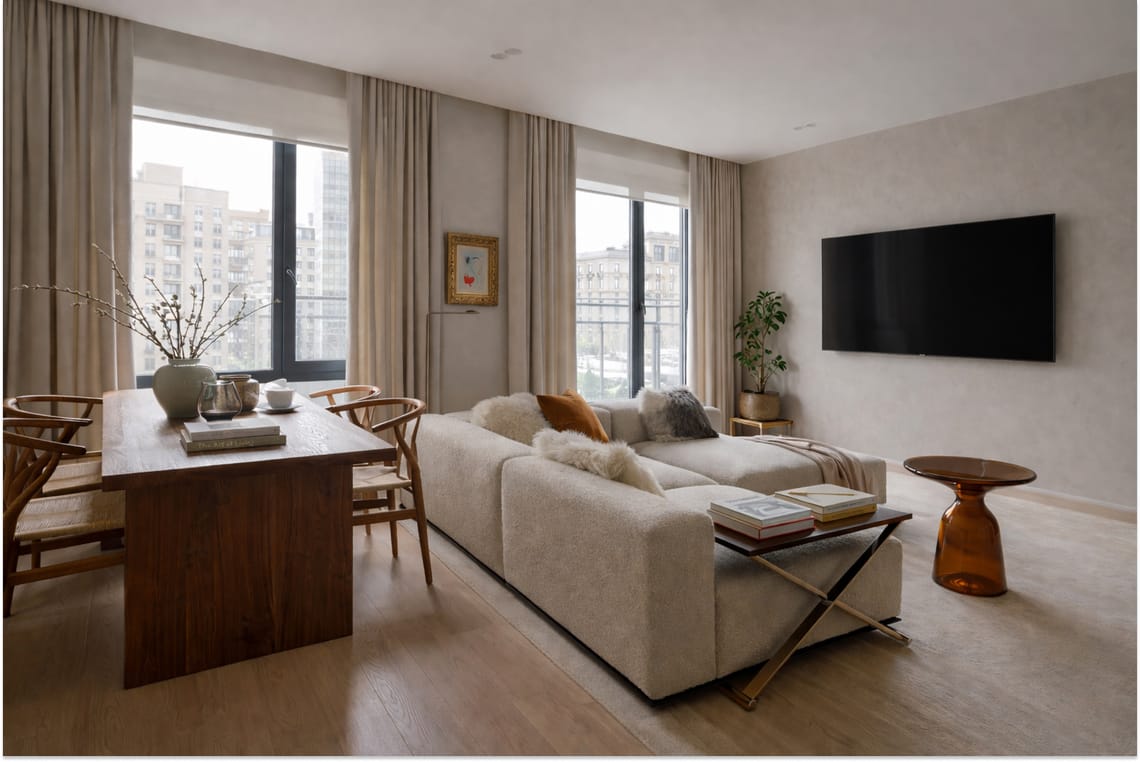
Open plan once felt like the final statement of modern living. More light. More air. Less ceremony. A home where kitchen, dining, and living dissolve into a single continuous space.
But every stage eventually needs wings.
In recent years, both taste and daily fatigue have revealed the limits of endless openness. Sound travels without restraint. Daily life has no shadow. The home becomes a single exposed field where every activity is equally visible and equally present. What emerges instead is a renewed demand for defined spaces—not as regression, but as correction.
This does not imply a return to rigid rooms and corridors. Rather, it suggests a more nuanced model: spaces that remain connected, yet articulated. A layout where function becomes legible again, where privacy exists without isolation, and where the home regains rhythm.
In this context, boundaries are less about walls and more about pauses. A kitchen that does not need to perform as a backdrop to everything else. A place to take a call without turning it into ambient noise for the entire home. A surface that can hold traces of life without feeling like it disrupts an image.
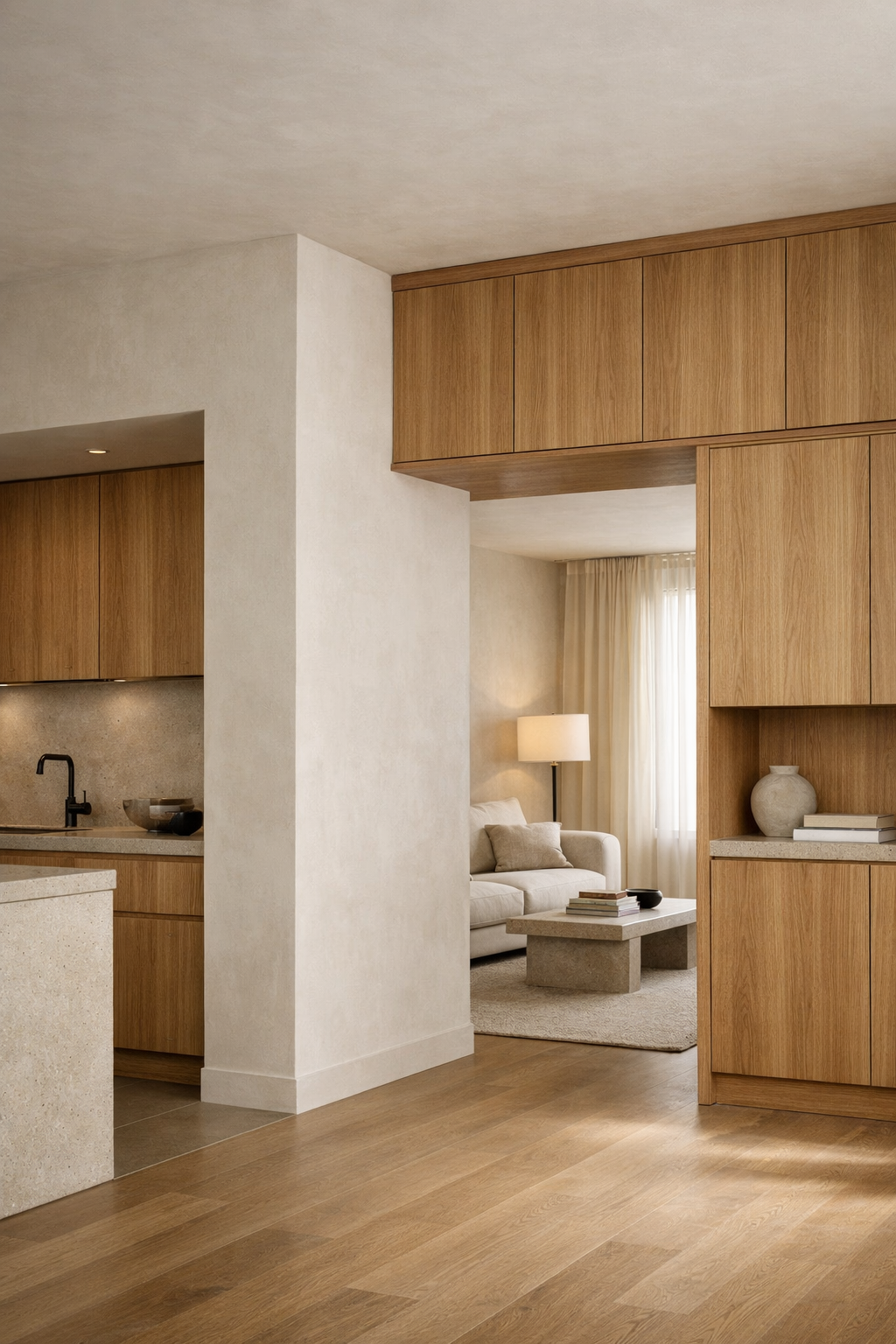
These boundaries are often quiet. A shift in ceiling height. A turn in geometry. A built-in element acting as a threshold. Even light itself—redefining depth, separating one zone from another. Where open plan once removed divisions, the emerging approach restores meaning to them.
This subtle segmentation feels, paradoxically, more contemporary. The modern home is no longer a single-purpose environment. It is office, retreat, workshop, and place of rest—often within the same footprint. The more roles it carries, the more necessary it becomes for those roles not to overlap entirely.
The return of rooms is not nostalgia. It is a maturation of planning—an understanding that comfort is not only a matter of light and scale, but of well-calibrated boundaries that allow life to take different forms without conflict.