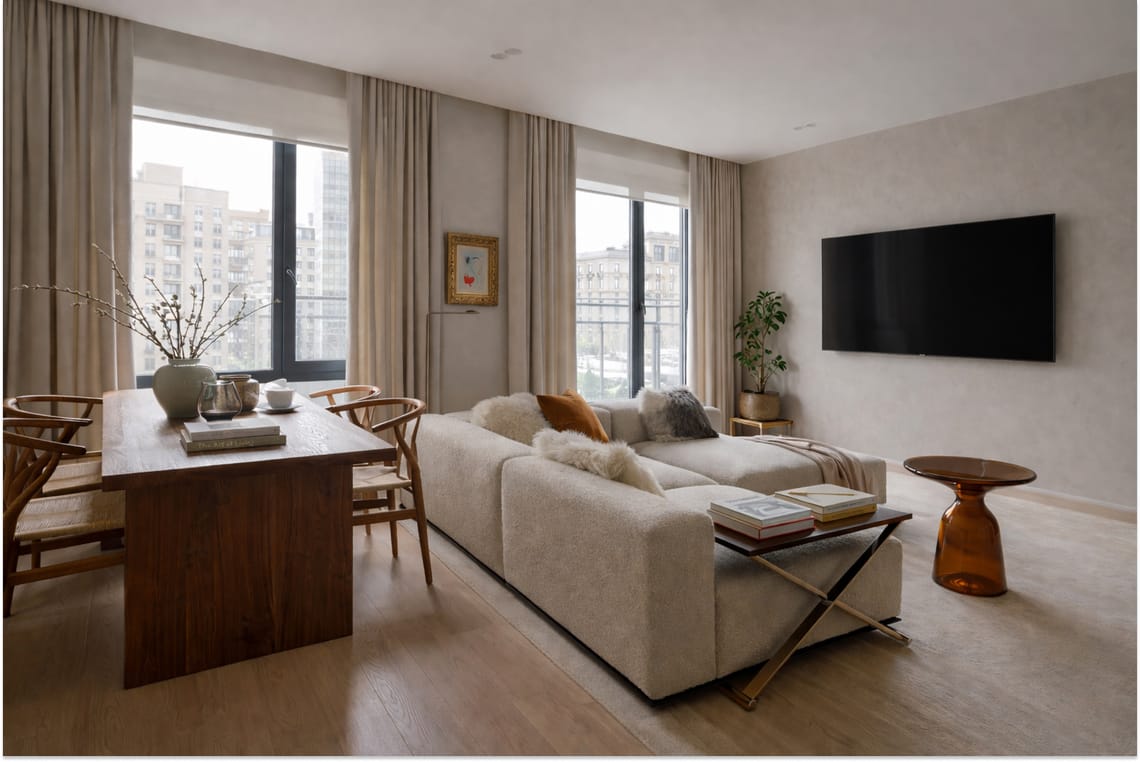
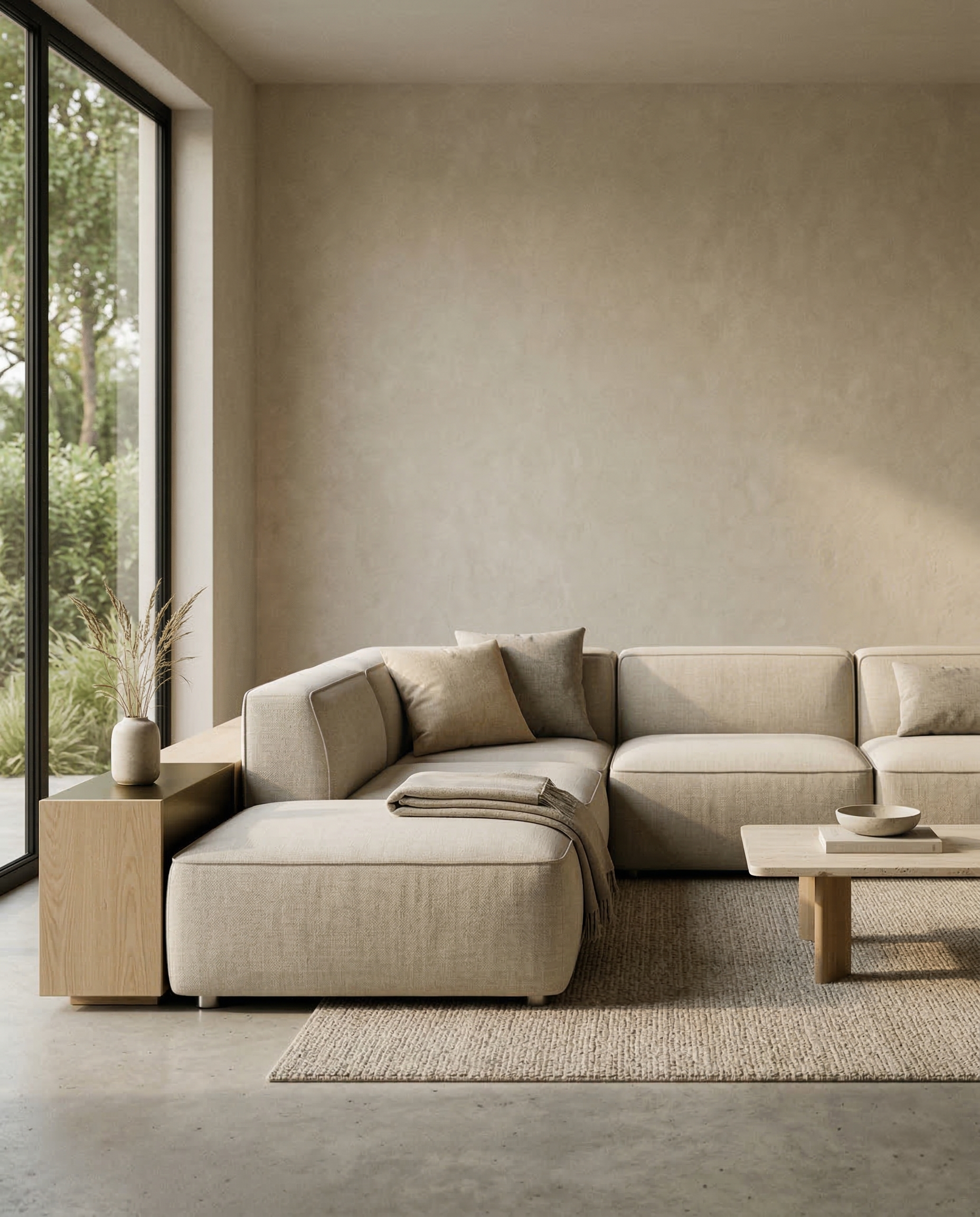
Some furniture occupies space. Other furniture defines behavior. The sofa has always belonged to the latter: it shapes how we rest, how we gather, how we pause.
Today, it is undergoing a quiet transformation. The sofa is no longer a fixed composition. Increasingly, it becomes a system.
This shift reflects a broader change in how we live. Domestic life has fragmented into multiple overlapping scenarios—work, rest, social time, solitude. A single room must accommodate all of them. The sofa, at the center of that space, must adapt accordingly.
Modularity here is not a visual trick. It is a form of resilience. A system that can be reconfigured, extended, reduced, or repaired without replacing the whole. A structure that accepts change as part of its lifespan.
This introduces a different definition of quality. Not appearance alone, but serviceability. Can a cover be replaced? Can a worn element be renewed? Are the connections legible, accessible, intentional?
In this sense, modular furniture approaches architecture. It depends on proportion, repetition, and clarity of structure. The form is not decorative—it is the outcome of a system.
There is, however, a risk. Under the guise of flexibility, some systems dissolve into formlessness. A true system is not neutral—it is disciplined. Depth, height, and proportion remain precise, ensuring that comfort is not sacrificed for adaptability.
The contemporary sofa becomes a measure of interior maturity. It reveals whether a space prioritizes image or use. Increasingly, the answer leans toward use—and, as a result, toward a quieter, more convincing kind of beauty.